In every line I draw and every story I help unfold, I carry with me the rhythms of Southern Italy, a place where the past whispers through cobbled streets and creativity is woven into everyday life. My work lives at the crossroads of cultures, where curiosity meets connection, and where learning is always a shared journey.
Curious about working together, hosting a workshop, or starting a creative conversation?
I’d love to hear from you.
Un bambino che impara che il cielo non è sempre e solo blu è un bambino che probabilmente in futuro saprà trovare più soluzioni creative a un problema, che sarà più pronto a discutere e a non subire.
Bruno Munari
A child who learns that the sky is not always and only blue is a child who will likely be able to find more creative solutions to a problem in the future, who will be more ready to discuss and not simply accept things.
Bruno Munari
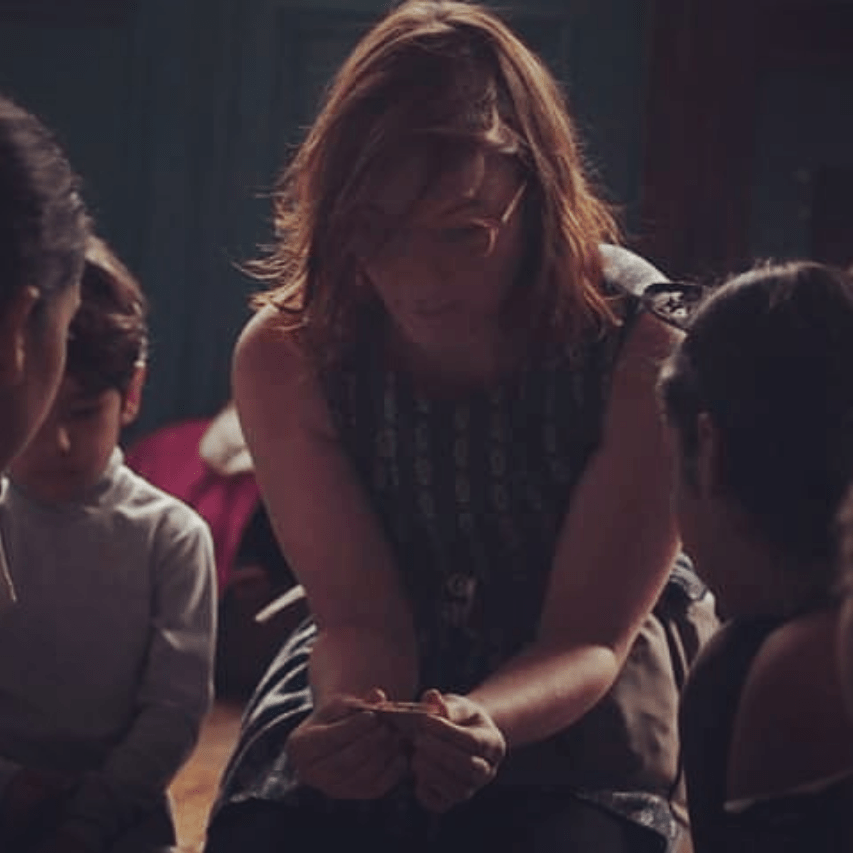
Hi, I’m Valentina De Luca, an illustrator and educator with roots in the sun-drenched South of Italy, where history, culture, and traditions collide in the most beautiful ways. My heritage has shaped who I am, grounding me deeply in my origins while sparking a lifelong curiosity about the world around me. This also led me to Berlin in 2009, where I now live and work.
I studied Painting and Editorial Graphics at the Academy of Fine Arts in Rome and Naples, followed by a three-year training as a state-certified educator in Germany, and later pursued a Master’s in Inclusive and Innovative Education from the Erickson Study Center in Italy. Over the years, I’ve worked across kindergartens, schools, workshops, and visual arts projects, weaving together my passions for pedagogy, visual arts, and inclusion.
My work focuses on themes like migration, environmental sustainability, human rights, and neurodivergence, not as abstract ideas, but as lived experiences that shape how I teach and create.
After a recent diagnosis, I came to understand myself as neurodivergent. This new self-awareness, and the research I’m doing around it, helps me deepen the inclusivity and empathy of my educational approach. It allows me to design spaces where people feel seen, supported, and free to express themselves.
Whether I’m drawing, teaching, leading a workshop or collaborating on a community project, I try to create spaces where people feel seen, heard, and encouraged to express themselves. I love exploring how creativity can bring us closer, unlock our potential, and help us appreciate the richness in our differences, both in art and in everyday life.
 ValeTalea